

KEYNOTES 2026

Ingrid Dekkers
Director Supply Chain Planning & Design for Industrial Automation at Schneider Electric
What does S&OP look like inside one of the world's leading supply chains?
Ingrid shares how the company is evolving from S&OP towards Integrated Business Planning. Schneider Electric's supply chain has topped Gartner's Supply Chain Top 25 ranking for three consecutive years, yet the journey is far from complete.
Drawing on her experience in global planning leadership roles, Ingrid will discuss how Schneider Electric deals with rapidly changing demand, component shortages, long supply lead times and increasing geopolitical uncertainty. She will explain how these developments are changing the role of S&OP, the decisions organisations need to make, and how different functions can be aligned around a single planning process.
Beyond processes and technology, Ingrid will also share her perspective on the people side of S&OP. What does it take to build a team that drives action rather than simply reports the numbers? And how do you create ownership across the organisation? Expect an honest account of the challenges, trade-offs and lessons learned along the way.
Ingrid Dekkers is Director Supply Chain Planning & Design for Industrial Automation at Schneider Electric, based in Paris. Over the past 13 years, she has held a variety of global and regional supply chain leadership roles across Europe, Singapore, and the Middle East, including Global S&OP Leader.
Her experience spans demand planning, integrated business planning, digital transformation, and end-to-end supply chain design. Having led large-scale planning deployments, business transformations and cross-functional planning teams around the world, Ingrid brings a practical perspective on aligning strategy, operations, and decision-making in complex supply chain environments.
Today, she helps shape planning and supply chain design within Schneider Electric, whose supply chain has been ranked number one in Gartner's Supply Chain Top 25 for three consecutive years. At S&OP Flavour Day, Ingrid will share lessons from Schneider Electric's S&OP/IBP journey, including how to create alignment across functions, manage trade-offs and improve decision-making in an increasingly volatile business environment.

Jeroen de Lange
Supply Chain Director, Mediq
Beyond Planning: Turning S&OP into Business Performance
For Jeroen, the real value of S&OP is not in creating the perfect forecast. It is in seeing what is coming, making better decisions together and acting before the customer feels the impact. Drawing on his experience in Supply Chain, Jeroen shares how Mediq is strengthening its S&OP approach by connecting data, insight, and execution via S&OE. He will discuss the journey from looking back at forecast accuracy and bias towards a more forward-looking approach, anticipating out-of-stocks, backorders and inventory risks and strengthening the connection between Demand & Supply, Category Management and Sourcing.
Jeroen will also share why he believes successful S&OP is ultimately about people: People who understand the end-to-end chain, challenge the facts, collaborate across functions, and embrace new possibilities such as AI.
His key message is clear: See earlier, decide together and act before the customer feels the problem.
Jeroen de Lange is Director Supply Chain Benelux at Mediq, one of the leading providers of medical devices and healthcare solutions in the Netherlands.
He is responsible for planning and supply chain processes that support millions of patients and healthcare professionals across the region, with a focus on collaboration, operational performance and resilience.
Throughout his career, Jeroen has worked in complex healthcare environments and has played a key role at Mediq in strengthening integrated planning and creating greater visibility and control across the company.
At S&OP Flavour Day, Jeroen will share how Mediq moved from an S&OP process full of surprises to one that gives the business greater control and predictability. He will explore the practical changes behind that journey, including stronger cross-functional collaboration, ownership, portfolio rationalisation, demand enrichment and inventory risk management.
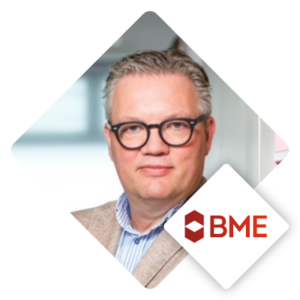
John Tros
Senior Vice President Operations and member of the Executive Management Team, BME Group
Virtus et Ordo Amoris: Creating Order, Courage and Performance Through S&OP
At BME, S&OP brings structure to competing priorities across a complex and volatile value chain. With almost one million products, 18,000 suppliers and multiple supply routes, decisions around price, demand and availability require clear priorities and shared choices.
Drawing on Augustine’s concept of ordo amoris, placing what matters most in the right order, John will show how S&OP can align commercial, operational and financial decisions. He connects longer-term business planning and financial targets with the day-to-day realities of service, inventory, capacity and supply risk.
In a market shaped by inflation, geopolitical disruption, regulation and rising construction costs, these choices become even more critical. Sales wants availability, Operations stability, Finance cash, Procurement margin and risk control, and Supply Chain reliable stock. John’s central question: how do you decide together what matters most, and then act accordingly?
John Tros is Senior Vice President Operations and a member of the Executive Management Team at BME Group, one of Europe’s leading building materials distributors. BME operates more than 940 locations across eight countries and serves approximately 275,000 customers. John leads the Group’s procurement, supply chain and logistics agenda, strengthening operational performance in a market shaped by volatility, complexity and constant change. He also leads BME’s Environmental Taskforce, helping customers make more informed choices about sustainable building materials.
Before joining BME, John spent nearly a decade as an Advisory Partner at KPMG, leading complex transformation projects. His experience includes work on the integration of Ahold and Delhaize, Shanks and Van Gansewinkel, and Schiphol’s asset strategy. He combines a PhD in Purchasing Management with a practical, hands-on leadership style and a proven ability to translate strategy into sustainable operational results.
At BME, John has played a central role in realising synergies, strengthening supply-chain resilience, accelerating data-driven decision-making and building a more agile operating model. He is particularly focused on achieving the right balance between central direction and local entrepreneurship. Drawing on the dilemma-reconciliation approach developed by Dr Fons Trompenaars, he helps organisations turn competing priorities into practical, sustainable solutions.
The Royal Netherlands Naval College’s motto, “Kennis is macht, karakter is meer” (“Knowledge is power, character is more”), continues to shape his leadership philosophy. He believes that lasting transformation depends not only on technology, but above all on people, effective change management and an unwavering focus on solving real business problems.

Moderator Jonathon Karelse
Award-winning CEO of NorthFind Management and a global leader in S&OP, demand planning, and operations management
What is the real purpose of your S&OP?
Is your company ready for Sales & Operations Planning (S&OP) or even Integrated Business Planning (IBP)? What should be the business outcome of this decision-making process? Jonathon Karelse will challenge participants to reconsider both questions.
Jonathon will revisit what Walmart originally set out to achieve with its first S&OP project in the 1980s, using that starting point to examine what this process should deliver today. His central message: S&OP is not a one-size-fits-all solution. Its design must reflect the particular business challenges, capabilities and financial objectives.
But how do you assess readiness? Rather than relying on self-assessment questionnaires, Karelse advocates an independent review involving auditors with expertise in finance, supply chain and commercial operations. By examining the conversations taking place in S&OP meetings, these specialists can assess how functions interact, how decisions are reached and where barriers prevent effective alignment.
The assessment should do more than identify process weaknesses or assign a maturity score. It should establish a clear link between the proposed S&OP project and its expected financial impact. Which business problems will it address? Where will it create value? And what improvements would justify the investment?
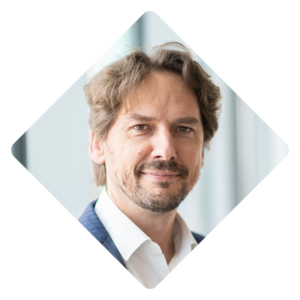
Moderator Bram Desmet
Professor Vlerick Business School
Author of ‘Rethinking Supply Chain’
S&OP in different driving modes
What if S&OP focused less on reaching consensus and more on making better decisions under uncertainty? Bram Desmet challenges the traditional S&OP process and introduces a different way of thinking about planning. Using different ‘driving modes’, he shows how companies can adapt their planning to growth opportunities, risks, and changing market conditions. He also explores how AI can help companies assess uncertainty, connect operational, commercial, and financial information, and move towards more autonomous planning.
The result: an S&OP process that provides clearer direction while allowing planning to respond faster when circumstances change.
Recordings of previous editions of S&OP Flavour Day are available on the YouTube channel of Supply Chain Movement: